Honorarium payments: what they are, when to use them, and how to pay
By Drew Laing●6 min. read●Aug 29, 2026

An honorarium is a voluntary, one-time payment offered to thank someone for a service where no fee was negotiated, such as a guest lecture, panel appearance, or keynote. Typical amounts run from $150 to $1,000, though high-profile speakers can command more. The IRS treats honoraria as taxable income, and organizations report payments of $2,000 or more per person on a 1099-MISC.
Planning an event means juggling countless details, from logistics to agenda planning to guest management. Speaker compensation is the piece that tends to get sorted out last, often after the invitations have already been sent out.
That timing causes problems on both ends. Speakers want to know what they're getting before they commit, and your finance team needs to know how to classify the payment before it goes out the door.
Here's what qualifies as an honorarium, when to offer one, how much to pay, and how other organizations handle it.
What is an honorarium?
The word comes from the Latin term honōrārium, meaning gift. An honorarium recognizes someone for providing valuable services outside their usual professional duties, such as a keynote session, guest lecture, or panel appearance.
What makes honorarium payments unique is that they're entirely voluntary. Giving someone an honorarium is a gesture of goodwill. It shows your appreciation for the speaker's time and participation rather than being formal compensation.
Honoraria differ from speaking fees in one important way. Honoraria are ex gratia payments, meaning they're given as a gift. They're not based on a contractual agreement. Speaking fees involve negotiated compensation and a formal legal contract.
Another key point: honoraria are paid directly to the individual, not to a business or corporation.
Honorarium vs. stipend vs. speaker fee
These three terms get used interchangeably, but they aren't the same thing. An honorarium is voluntary and one-time, a stipend is a fixed recurring payment meant to support living expenses during a finite period, and a speaker fee is negotiated compensation backed by a contract.
| Attribute | Honorarium | Stipend | Speaker fee |
|---|---|---|---|
| Payment type | Voluntary | Fixed regular payment | Negotiated |
| Frequency | One-time | Recurring | One-time or ongoing |
| Contract required | No | Sometimes | Yes |
| Paid to | Individual only | Individual | Individual or business |
| Amount set by | Paying organization | Paying organization | Negotiation |
| Taxable | Yes | Yes | Yes |
| IRS form | 1099-MISC if $2,000 or more | 1099-MISC or W-2 | 1099-NEC or W-2 |
When should you pay a speaker an honorarium?
Deciding when to offer an honorarium depends on several key factors. Failing to meet these criteria might result in the payment being viewed as something other than an honorarium, which can have different implications.
Non-recurring service
An honorarium applies to one-time, non-recurring services rather than an ongoing engagement. Common examples of eligible services include guest lectures, conference or webinar presentations, participation in panels or workshops, keynote speeches, and research presentations.
Recognition of expertise
An honorarium is not a typical payment for a service delivered at an agreed-upon price. Instead, it's a gesture of appreciation to recognize a person's unique knowledge, expertise, or standing in a particular field.
Custom content
The time and effort a guest or speaker invests can directly influence both the timing and amount of their honorarium. For instance, crafting an entirely new presentation for a webinar or conference may warrant a higher honorarium than participating in a panel discussion or delivering a pre-existing presentation.
Travel and lodging
Honoraria are often used to help cover speaker costs, especially travel-related expenses. If your event requires a guest to travel to deliver an in-person speech at a conference or convention, you'll likely want to provide an honorarium or increase the amount to reflect your speaker's additional commitment.
When an honorarium isn't the right payment type
Not every guest speaker payment qualifies as an honorarium. The label doesn't fit when:
The speaker named a price or negotiated the amount with you.
The engagement requires a formal contract, statement of work, or purchase order.
The payment goes to a business, agency, or speaker bureau rather than an individual.
The recipient is a current employee of your organization.
The work is recurring or ongoing, like a monthly workshop series or an advisory retainer.
The speaker is a professional who charges a standard rate for appearances.
The amount was set by someone outside your organization.
If any of these apply, classify the payment as a professional service fee or consulting payment rather than an honorarium. Getting this wrong can create tax reporting problems and put the payment outside your organization's approved spending categories.
How much should an honorarium be?
Every organization has different considerations when it comes to setting honorarium budgets. Published guidance from universities and professional associations offers a useful starting point.
George Mason University outlines suggested amounts by event type, Williams College sets its ranges based on the speaker's background, and the Association of Clinical Research Professionals publishes a per-day rate in its sample speaker agreement. Here's how those benchmarks compare.
| Engagement type | Typical range | React |
|---|---|---|
| Guest speaker, single session | $500 to $750 plus travel | George Mason University |
| Panel discussion participant | $150 to $300 plus travel | George Mason University |
| One-hour panel, seminar, or debate | $250 to $500 plus travel | George Mason University |
| Colleague visiting a class or student meeting | $200 to $300 | Williams College |
| Well-published academic with notable expertise | Around $500 | Williams College |
| Multi-day industry conference speaker | Around $1,000 per day, travel included | ACRP |
Overall, honorarium amounts can range from hundreds to thousands of dollars, depending on a few factors.
Type of event: Corporate events, which typically have larger budgets to work with, often provide larger honorariums than academic or nonprofit gatherings.
Location: Logistical needs also factor in. If the speaker needs to cover travel and lodging expenses, your honorarium should reflect these additional costs. On the other hand, virtual events like a webinar or online seminar don't need to offset travel costs.
Speaker experience: How long has the speaker been an expert in their field? Since an honorarium is a token of appreciation for their expertise rather than a set fee for a service, the speaker's experience level should play a significant role in determining the amount. Those with greater experience or a long-standing reputation in their industry may warrant a higher honorarium. Recent accomplishments, such as publishing a new book or report, can draw larger audiences to a session or webinar and also justify a larger honorarium amount.
Presenter profile: The speaker's reputation and influence can significantly affect the honorarium amount. High-profile experts such as thought leaders, best-selling authors, or celebrities can often require larger honorariums or full-on speaker fees. Their visibility and ability to attract a larger audience add considerable value to the event, but often come at a higher cost.
When and how should you pay an honorarium?
Payment timing
While there are no strict rules about when an honorarium must be paid, it's a smart idea to determine the amount in advance, ideally before your event occurs. Most organizations typically send honorarium payments before the event or within 30 days after. This approach ensures clarity, builds goodwill, and positions your company as a responsive collaborator.
Forms of payment
Traditionally, honorarium payments are issued via cash or check. Today, digital payment options have introduced greater flexibility by allowing organizations to distribute honoraria through various payout options, including gift cards, virtual prepaid Visa cards, or monetary options like PayPal, Venmo, or Cash App.
Digital options matter more when your speakers aren't all in one place. A panel that pulls experts from four countries turns a simple thank-you into a currency and logistics problem if you're still working from checks.
Honorarium payments can also come in the form of a donation. Instead of paying the speaker directly, your organization can donate the amount to a charity or nonprofit on their behalf. This is a good option for industries with strict gift rules or executive-level presenters.
Is an honorarium taxable?
Yes, the IRS considers an honorarium taxable income under Publication 525. Organizations issuing honoraria must report the payments to both their recipients and the IRS using a 1099 form if the total compensation is $2,000 or more per individual during the 2026 calendar year.
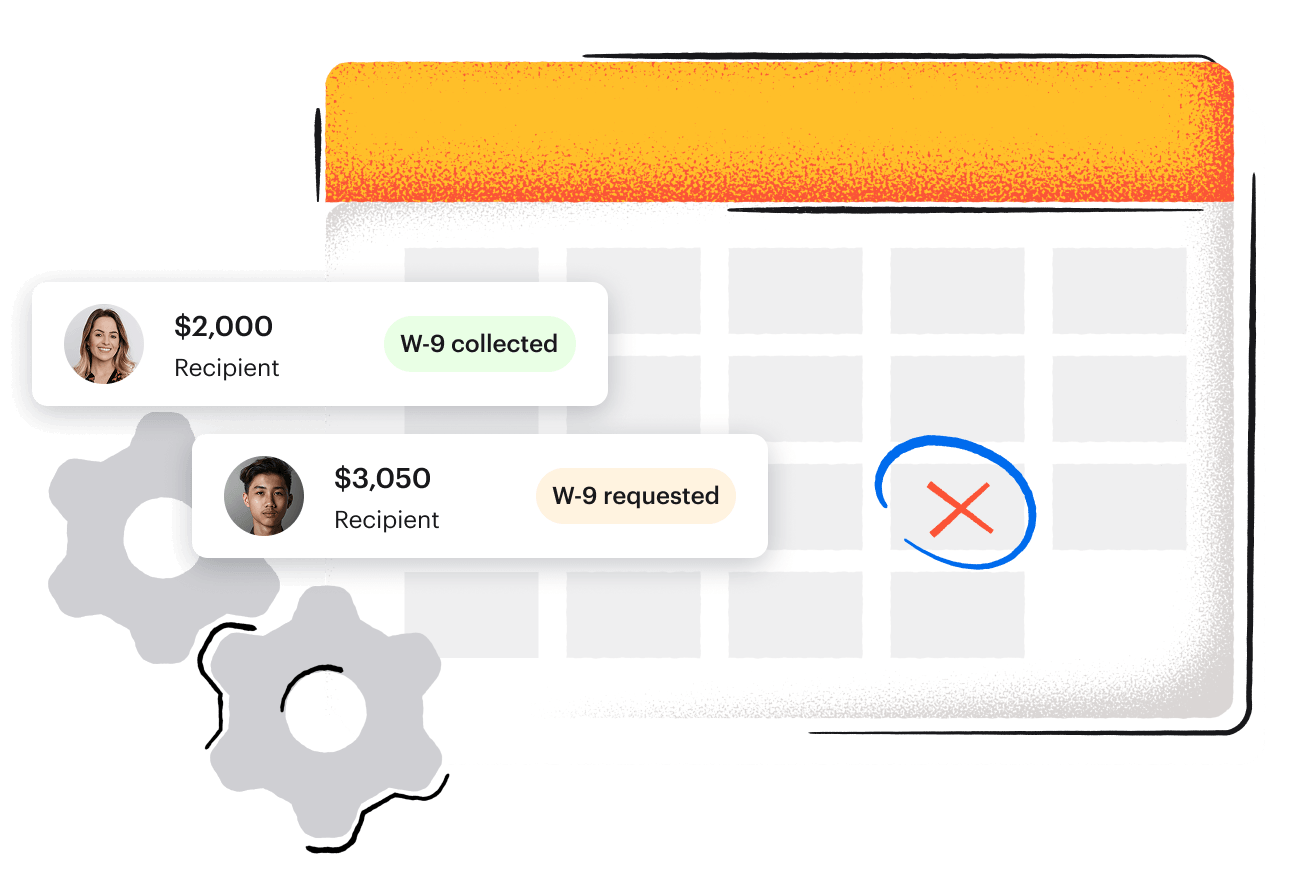
Even if the honorarium falls below the reporting threshold, your speakers must report it as income for tax purposes. Using a platform that automatically collects W-9 forms from recipients can make your life a lot easier.
Disclaimer: Tremendous can't provide tax or legal advice. Consult your company's tax and legal advisors to be sure you're handling honorariums in a way that's fully compliant and optimized for your situation.

What do real honorarium amounts look like?
If you're unsure what an appropriate honorarium payment might look like for your event or speaker, these examples provide some helpful guidance.
TEDx Talks
TED doesn't pay its speakers, but according to their website, they always cover travel-related costs and hotel accommodations if necessary. They also demonstrate gratitude for speakers who share their ideas and expertise freely by covering all production costs for their recorded sessions.
While TED doesn't publicly share honorarium amounts for travel and lodging, their approach can serve as inspiration when planning how to manage similar contributions at your own event.
Williams College
Williams College provides flexible honorarium guidelines based on the speaker's background and level of engagement. For colleagues visiting campus for a class or student meeting, the college suggests $200 to $300 as a gesture of appreciation.
Well-published academics with notable expertise may warrant around $500. Williams suggests increasing the amount if you're asking speakers to participate in multiple campus activities.
Association of Clinical Research Professionals (ACRP)
The Association of Clinical Research Professionals (ACRP) holds several regional events throughout the year to bring together members across the US. The organization offers a $1,000 per-day speaker honorarium that includes travel expenses, aligned with the valuable expertise of its research presenters.
Summary
Honorarium payments are best suited for one-time services, such as webinar presentations, keynote speeches, and panel appearances, serving as a token of appreciation for your guest's time and expertise. Knowing the right timing and method for distributing honoraria to guests ensures a seamless and efficient process.