Closed-loop vs. open-loop gift cards: Everything you need to know
By Izabelle Hundrev●5 min. read●May 20, 2026
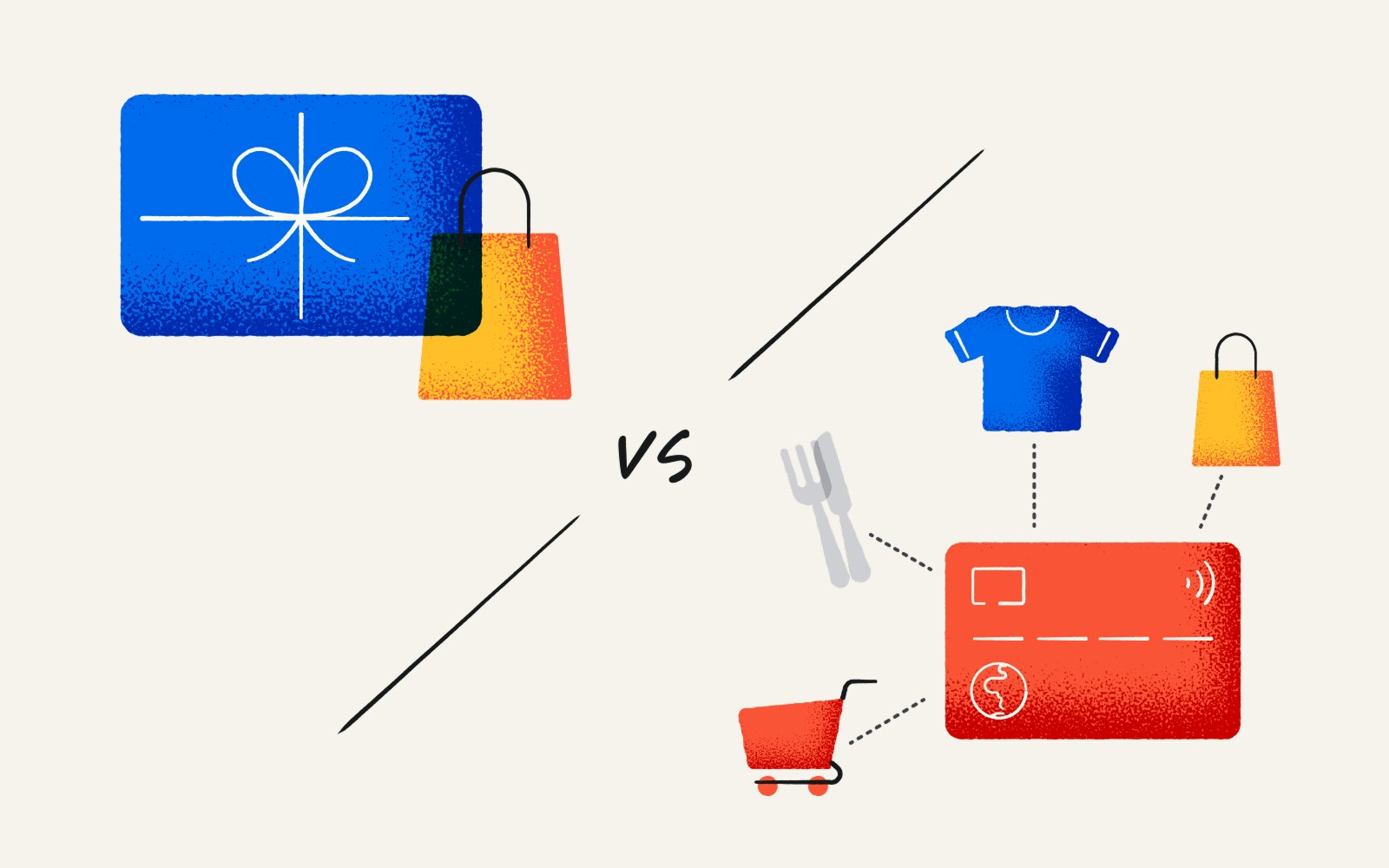
Gift cards are one of the most popular reward options for teams, but not all gift cards work the same way.
There are two primary types: open-loop and closed-loop gift cards. They come with different constraints, fees, and tradeoffs that can meaningfully impact your incentive program and your recipients' experience.
This guide covers how each type works, when they’re most effective, and how to decide which option fits your rewards strategy best.
What is an open-loop gift card?
An open-loop gift card is a prepaid card that works like cash. Unlike store-specific gift cards, open-loop cards aren’t tied to a single retailer: they carry a major payment network logo such as Visa, Mastercard, or American Express. This means recipients can use them almost anywhere those networks are accepted, both online and in-store.
You might hear open-loop gift cards compared to open-loop credit cards since both run on the same payment networks. The key difference is that gift cards are prepaid, meaning there's no credit line, no interest charges, and no credit check involved.
What is a closed-loop gift card?
A closed-loop gift card is a prepaid card that can only be used at the issuing merchant or merchant brand family. Unlike open-loop cards, they typically carry the retailer's logo and can't be used outside that retailer or its network. Some of the most popular closed-loop cards include Amazon.com, Walmart, and Target.
Certain cards extend across a group of related brands. For example, a Gap gift card can also be used at Old Navy and Banana Republic, giving recipients more purchasing flexibility while still staying within the same brand family.
Open-loop vs. closed-loop gift cards: Pros, cons, and use cases
Neither option is universally better. The right choice depends on your goals, budget, and how well you know your recipients.
| Feature | Open-loop gift cards | Closed-loop gift cards |
|---|---|---|
| Acceptance | Typically, anywhere the network is accepted, with constraints | Only at the issuing retailer |
| Available formats | Physical, virtual, digital wallet | Physical, virtual (varies by retailer) |
| Network | Visa, Mastercard, AmEx | Proprietary merchant system |
| Fees | Activation and inactivity fees common | Rarely have fees |
| Best for | Flexibility, cash-like rewards | Brand loyalty, targeted gifting |
The pros and cons of open-loop gift cards
Best for: Programs with diverse or unknown recipient preferences that would benefit from maximum flexibility. Additionally, any program where recipients are spread across multiple countries or regions.
One of the biggest advantages of open-loop cards is flexibility. Recipients can spend them almost anywhere the network is accepted, including across country borders. This makes them a strong fit if your recipient base is global or geographically dispersed. They also tend to feel more like cash, which can increase the appeal for some recipients.
That flexibility comes with tradeoffs, though. Activation fees are charged to the sender and can run from $3 to $6 per card, which adds up fast. For example, a program sending 10,000 cards at $5 each adds $50,000 in administration costs.
Inactivity fees are another factor. If a recipient doesn't use the card within a certain period (typically 12 months), they’re typically charged a monthly inactivity fee, which can leave a bad impression of your program.
Open-loop cards can also feel less personal than a retailer-specific card, which may reduce the emotional impact of the reward. And while acceptance is broad, it's not universal. Some cards block certain purchase categories, such as gambling or crypto, and others are restricted to U.S. transactions only.
The pros and cons of closed-loop gift cards
Best for: A recipient base that has known brand preferences (for example, a sales team that loves Dunkin' coffee) and budget-conscious programs where avoiding activation fees matters.
Closed-loop gift cards tend to be more cost-efficient. Most don’t charge activation or inactivity fees, making them easier to budget for at scale. Because they’re tied to specific retailers, they can also feel more personal and intentional, especially if the recipient already has a positive association with that brand.
The tradeoff is relevance. If a recipient doesn’t shop at that retailer, the card goes unused or re-gifted. This leads to wasted budget and a poor overall experience for the recipient.
Additionally, most closed-loop cards are limited to specific regions or markets, so they’re harder to scale for global incentive programs without a platform that offers a broad international reward catalog.

How to choose the right card type for your rewards program
A few questions can help you narrow down the right option for your program.
Does your reward program tie to a specific theme or initiative? Closed-loop gift cards work well when rewards reinforce a specific theme or experience. For example, a wellness program that rewards healthy habits with a Peloton gift card, or a peer mentorship program that sends Starbucks cards to encourage coffee chats. In these cases, the gift card and brand reinforce what the program celebrates.
Who are your recipients? If you know your audience well and they share common interests or brand preferences, a closed-loop card can feel more thoughtful and curated. If your recipient base is diverse or their preferences are unknown, open-loop is the safer default.
Where are they located? Closed-loop gift cards are tied to specific retailers that may not exist or be popular in every region. Open-loop gift cards are often the better choice for multi-country international programs, since they function like cash and are more widely accepted.
What’s your budget? Open-loop gift cards often include activation fees, which can add up quickly at high volumes. Closed-loop gift cards rarely charge fees, making them the more cost-efficient option.
When to offer both
For many programs, the most effective strategy isn’t deciding between open- and closed-loop gift cards. It’s giving recipients the ability to choose for themselves. When people can select their own reward, the experience feels personal even at scale, which can boost overall satisfaction.
When you’re running a program with thousands of recipients, manually catering to individual preferences isn’t realistic. Offering both card types solves that problem without adding complexity to your operations.
Giving recipients a choice also helps offset the main downsides of each option. Open-loop gift cards can feel generic, but that changes when a recipient actively selects one. Closed-loop gift cards can go unused if the brand isn’t relevant, but that risk disappears when recipients choose the retailer themselves.
To make this work in practice, look for an incentive platform that supports both open- and closed-loop cards and lets recipients choose at the point of redemption. This makes it easy to deliver a flexible, personalized experience without added manual work.