How to reduce patient no-shows
By Abby Quillen●8 min. read●Mar 24, 2026
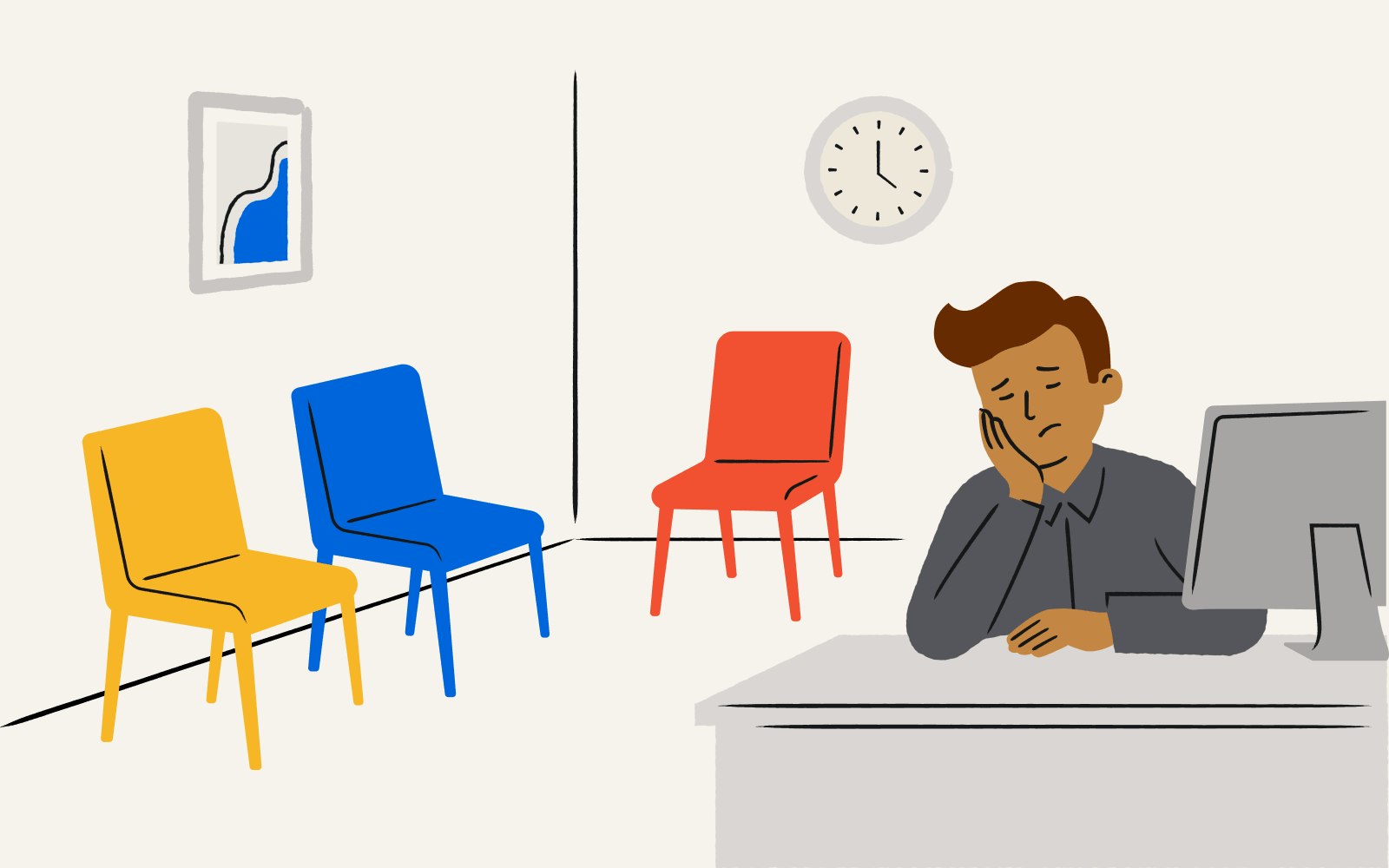
Patient no-shows are rarely intentional. In most cases, something gets in the way: a transportation issue, scheduling conflict, a missed reminder, or plain old anxiety.
But every missed appointment has a cost. Patients skip necessary care, while empty slots translate into lost time and revenue for your practice. No-show rates typically range from 7% to 33%, depending on the specialty. In one study, a 12% no-show rate cost a practice $89,107 annually.
Whether it’s a no-show, late cancellation, or a reschedule, each has a different impact on your practice and requires a different approach. This guide covers what’s actually driving missed appointments and proven steps to reduce them.
Key takeaways
Up to one-third of appointments are no-shows: Between 7% and 33% of appointments are no-shows, depending on the specialty.
No-shows are often caused by friction, not forgetfulness: Patients are more likely to miss appointments when it’s hard to reschedule, confusing to prepare, or unclear what the costs will be.
Simple fixes can boost attendance: Well-timed reminders, easy rescheduling, and clear prep instructions can meaningfully improve attendance.
Even modest improvements in no-show rate add up: Reducing no-shows means more consistent revenue and better quality care for patients.
Why patients miss appointments
Studies suggest patients miss appointments for many different reasons: economic hardships, insurance coverage gaps, anxiety, and scheduling conflicts. Telehealth can significantly reduce no-shows, suggesting transportation and other logistical barriers also play a role.
A Cureus study found that Monday was the most common day on which patients missed appointments. Time of day, weather, and type of provider didn’t appear to be significant factors.
The strongest predictor of missed appointments is one that your practice can influence: lead time. In general, the larger the gap between scheduling and an appointment, the more likely a patient is to miss it.
A simple way to diagnose why patients aren’t showing up
Start by tracking key data points for each no-show over a set time period:
New or returning patient
Appointment type: screening, follow-up, or procedure
In-person or virtual appointment
Provider
Day of week and time of day
Scheduling lead time: same week, more than one week out, or more than two weeks out
Patient demographics: age, primary language, and cultural or social background
Travel distance and access to transportation
You can store this information in your electronic health record (EHR) software, or record it in a spreadsheet or patient database.
Some of these factors, such as language, economic circumstances, and transportation, fall under social determinants of health (SDOH) that are outside your control. Identifying them helps separate avoidable from unavoidable no-shows and set realistic improvement targets, so you can focus your efforts where they’re most likely to make a difference.
7 high-impact ways to reduce appointment no-shows
Here are seven proven ways to reduce no-shows at your practice.
1. Make rescheduling easier than ghosting
When rescheduling means sitting on hold, most patients will let the appointment pass. A self-scheduling option lets patients easily book and reschedule appointments at their convenience, without needing to call your practice or office.
Why it works: Patients may not show up because rescheduling feels like too much effort. In one analysis, clinics that adopted an EHR-based self-scheduling tool improved both patient access and efficiency. Plus, patients were seen for appointments 14 days sooner on average.
Use these tactics to make rescheduling effortless:
Add frictionless reschedule options: Offer two-way texting for schedule changes or a one-click reschedule link that directs patients to a self-scheduling portal.
Use clear, inviting language: Avoid shaming and stick to friendly language on reminders and confirmations. For example, “Need to change your appointment time? No problem!”
Implement a waitlist: Invite patients to sign up for a waitlist so you can reschedule cancellations quickly.
Use flexible panels: Instead of assigning patients to a single provider, create flexible panels to fill open slots across multiple providers or locations.
2. Use a confirmation sequence that matches the lead time
Send reminders on a schedule that matches how far out the appointment is.
Why it works: A single confirmation usually isn’t enough. In one study, patients who received reminders three days and one day prior to an appointment were less likely to miss it than those who received only one notice.
Here are some best practices for building your confirmation sequence:
Define your touch points: Plan to send reminders at key times, such as:
Immediately after the patient schedules
Halfway through the lead time
72 hours before the appointment
24 hours before the appointment
The morning of the appointment
Vary your message: Make each reminder unique so patients don't tune them out. Every message should cover why the visit matters, what to bring, preparation steps, and how to reschedule. Switch up the tone and format so they don't feel identical.
Use a mix of contact methods: Combine email, text, and phone calls to make sure patients receive your reminders.
Sample patient message templates
Here are some templates you can personalize for SMS and email:
3. Simplify appointment prep
Using an EHR or patient messaging platform, break prep instructions into short, timed messages rather than sending a single long list.
Why it works: Most prep instructions are dense and hard to follow. In one study, surgery prep materials were written at a 12th-grade level, well above the recommended sixth-grade level. Simpler instructions help patients feel more prepared and less likely to skip the appointment.
To improve the readability of your prep instructions, follow these tips:
Send one step per message: Keep each message short and easy to read, and time it so it arrives when the patient actually needs to act on it. For example, send fasting instructions the day before, not a week out. Send separate messages for forms, labs, and check-in instructions.
Include an easy help path: At each step, include a tap-to-call link or an easy text prompt, such as “reply ‘help’ to receive a phone call” so patients don’t have to search for a phone number.
4. Ease cost anxiety before it leads to avoidance
Share cost information with patients proactively, before anxiety has a chance to turn into avoidance.
Why it works: Nearly six in 10 middle-income Americans in one study said they expect to delay or skip medical care because of cost concerns. Understanding costs upfront can help patients feel more confident about attending their appointments.
For services covered by insurance, cost estimates are rarely straightforward since rates vary by carrier and plan. But there are still meaningful steps you can take:
Encourage patients to use their insurer’s cost estimator tool: Most large insurers offer cost estimator tools that help patients understand deductibles, copays, and out-of-pocket expenses for common services.
Provide estimates for self-pay patients: In the U.S., the No Surprises Act requires practices to provide a good-faith estimate for patients without insurance before an appointment that includes itemized and total expected costs. Patients can dispute charges if they exceed estimates by $400 or more.
Make the billing team accessible: Provide an easy way for patients to reach out with billing questions. On the bill, include a callout such as: “Have questions about costs or billing? Call or text us at [Billing Phone Number].”
5. Develop a clear and easy-to-find no-show policy
Set expectations upfront with a clear, easy-to-understand no-show policy.
Why it works: Patients are more likely to follow rules they understand, and a clear policy gives you the foundation to enforce them consistently. That includes fees. In a Medical Group Management Association study, 25% of practices with no-show fees reported lower no-show rates than 16% without fees. However, no-show fees can disproportionately affect lower-income patients, so they're worth weighing carefully.
A few tactics that can make a difference:
Communicate your policy clearly: Make it easy to understand and share it at booking, on your website, and in reminders. For example: “Please reschedule or cancel 48 hours before your appointment to avoid a fee.”
Be transparent about fees: If you charge a fee, disclose the amount and explain how far in advance patients must cancel to avoid it.
Emphasize flexibility over punishment: Focus on rescheduling rather than penalizing patients. Consider including a grace policy or one-time exception if you charge fees.
6. Introduce incentives to make showing up feel worthwhile
Reward patients for keeping appointments, completing prep, or finishing a care series.
Why it works: Incentives act as a goodwill nudge, increasing patients’ perceived value of showing up. Research consistently shows that incentives encourage patients to participate in preventive care, vaccination programs, and health screenings.
A few tactics to help you build an incentive program that motivates patients:
Identify the right appointment types: Incentives tend to work best for preventive screenings, chronic care follow-ups, post-op checks, vaccines, and multi-visit care plans.
Choose an incentive model: Consider which structure best fits your practice. Attendance-based rewards are paid upon completion of a visit. Prep-based rewards are paid when a patient completes forms or labs on time. Plan completion rewards are paid after a patient finishes a full care series.
Stay compliant: In the U.S., federal rules limit incentives for products and services billed to insurers. An incentive platform can help you design a program that motivates patients while staying within those boundaries.

7. Follow up quickly after a missed appointment
When a patient misses an appointment, reach out the same day to encourage them to reschedule.
Why it works: In one study, 22% of no-show patients who received an electronic rescheduling request booked a follow-up appointment, compared with 11.6% in the control group. The sooner you reach out, the higher the chance patients will reschedule.
Use a simple three-message follow-up sequence after a missed appointment. Keep the tone compassionate and avoid shaming language:
Reaching out promptly after a missed appointment shows patients you're still invested in their care and gives them an easy path back.
How to measure success with your no-show strategy
To understand whether your no-show strategy is working, look at both the operational and revenue impact. Establish your baseline metrics first, then track changes by segment to spot what’s making a difference.
The metrics that matter
Start with these core metrics:
No-show rate: The percentage of scheduled appointments where the patient doesn’t show up
Late cancellation rate: The percentage of appointments canceled within your notice window, usually 24 to 72 hours before the appointment
Kept-visit rate: The percentage of scheduled appointments that patients attend
Reschedule rate after a miss: The percentage of patients who miss an appointment but later reschedule
Slot utilization: The proportion of appointment slots filled with patients
Segment data by these categories to pinpoint where improvements will have the biggest impact.
Appointment type: Routine check-up, follow-up, procedure, or preventive screening
New vs. returning: How long a patient has been with your practice
Lead time: How far in advance the appointment was scheduled
Channel source: How the appointment was scheduled, for example, on the phone or via a scheduling portal
Once you have a few months of segmented data, patterns will start to emerge. You may find that new patients scheduled more than two weeks out are your highest-risk group, or that a specific appointment type drives the majority of your no-shows.
Every kept appointment is a win
Patients have many reasons for missing appointments, and you’ll never eliminate all no-shows. But by taking the practical steps above, you can reduce your no-show rate.
You don’t need to overhaul everything at once. Pick one appointment type, set up a confirmation sequence with a reschedule link, and layer in a three-touch recovery flow. Track the necessary metrics to prove it works, then expand your efforts to another appointment type.
By incrementally improving your no-show rate, you’ll help patients get the care they need while driving consistent revenue for your practice.